| Call for | Submission Deadline | Notification of Acceptance |
|---|---|---|
| Papers (abstract) |
March 1st, 2026 |
-- |
| Papers (full paper) |
March 8th, 2026 |
May 19th, 2026 |
| Workshops | February 8th, 2026 | February 10th, 2026 |
| Tutorials | April 18th, 2026 | April 26th, 2026 |
| Highlights | March 8th, 2026 |
March 27th, 2026 |
| Posters | March 8th, 2026 |
March 27th, 2026 |
| Posters (Late Submission) | May 20th, 2026 | May 23rd, 2026 |
Keynote Speakers

Pietro Liò
University of Cambridge, UK
University of Cambridge, UK
Title: Designing biological molecules with generative AI: from RNA structure to synthesisable drugs
Abstract: Recent advances in generative artificial intelligence are beginning to transform how biological molecules are designed. Across RNA engineering, protein representation learning, and drug discovery, new models can now generate sequences and structures that are not only novel but also experimentally viable. For example, structure-conditioned RNA language models can design complex RNA folds and catalytic molecules that match or exceed human expert performance in laboratory validation, enabling the automated creation of functional ribozymes and structured RNAs. In parallel, synthesis-aware generative frameworks for small molecules incorporate chemical reactions directly into the generation process, producing drug-like compounds together with feasible synthetic routes rather than purely theoretical structures. Complementary work on large-scale protein representation learning shows that training on massive structural datasets improves the ability of models to capture relationships between sequence, structure, and function, providing foundations for data-driven biomolecular design. Together, these studies highlight a shift toward integrated AI pipelines that couple generative design with structural reasoning and experimental validation, moving the field closer to programmable biomolecules and practical AI-driven biotechnology.
Bio: Pietro Liò is a Professor of Computational Biology at the University of Cambridge and a member of Clare Hall. His research lies at the intersection of machine learning, network science, and biology, with a strong focus on understanding complex biological systems such as gene regulation, disease mechanisms, and aging. He has been a pioneer in applying graph-based methods, including graph neural networks, to biomedical data, enabling the integration of heterogeneous information across molecular, cellular, and clinical scales. His work spans topics such as systems biology, precision medicine, and the modeling of chronic diseases, often combining mathematical rigor with data-driven approaches.

Aidong Zhang
University of Virginia, USA
University of Virginia, USA
Title: Interpretability for Responsible Medical AI
Abstract: In recent years, major advances in artificial intelligence (AI) have been applied to medical and health data with promising results. Even though these methods demonstrate incredible potential in saving valuable man-hours and minimizing inadvertent human mistakes, their adoption has been met with rightful skepticism and extreme circumspection in critical applications such as medical diagnosis. The most paramount of these challenges is the lack of rationale behind predictions - making them notoriously a black box in nature. In extreme cases, this can create a lack of alignment between the designer's intended behavior and the model's actual performance. In this talk, I will discuss our recent research on explainable AI strategies, in particular, I will discuss concept-based learning models and show how the concept-based learning models and example-based learning models can be designed for explainable deep neural networks, vision transformers, and vision language models.
Bio: Dr. Aidong Zhang is Thomas M. Linville Endowed Professor of Computer Science in the School of Engineering and Applied Sciences at University of Virginia (UVA). She also holds joint appointments with Department of Biomedical Engineering and School of Data Science at University of Virginia. Her research interests include machine learning, data mining, bioinformatics, and health informatics. Dr. Zhang is a fellow of ACM (Association for Computing Machinery), AIMBE (American Institute for Medical and Biological Engineering), and IEEE (Institute of Electrical and Electronics Engineers). She is also a member of the Virginia Academy of Science, Engineering and Medicine (VASEM).
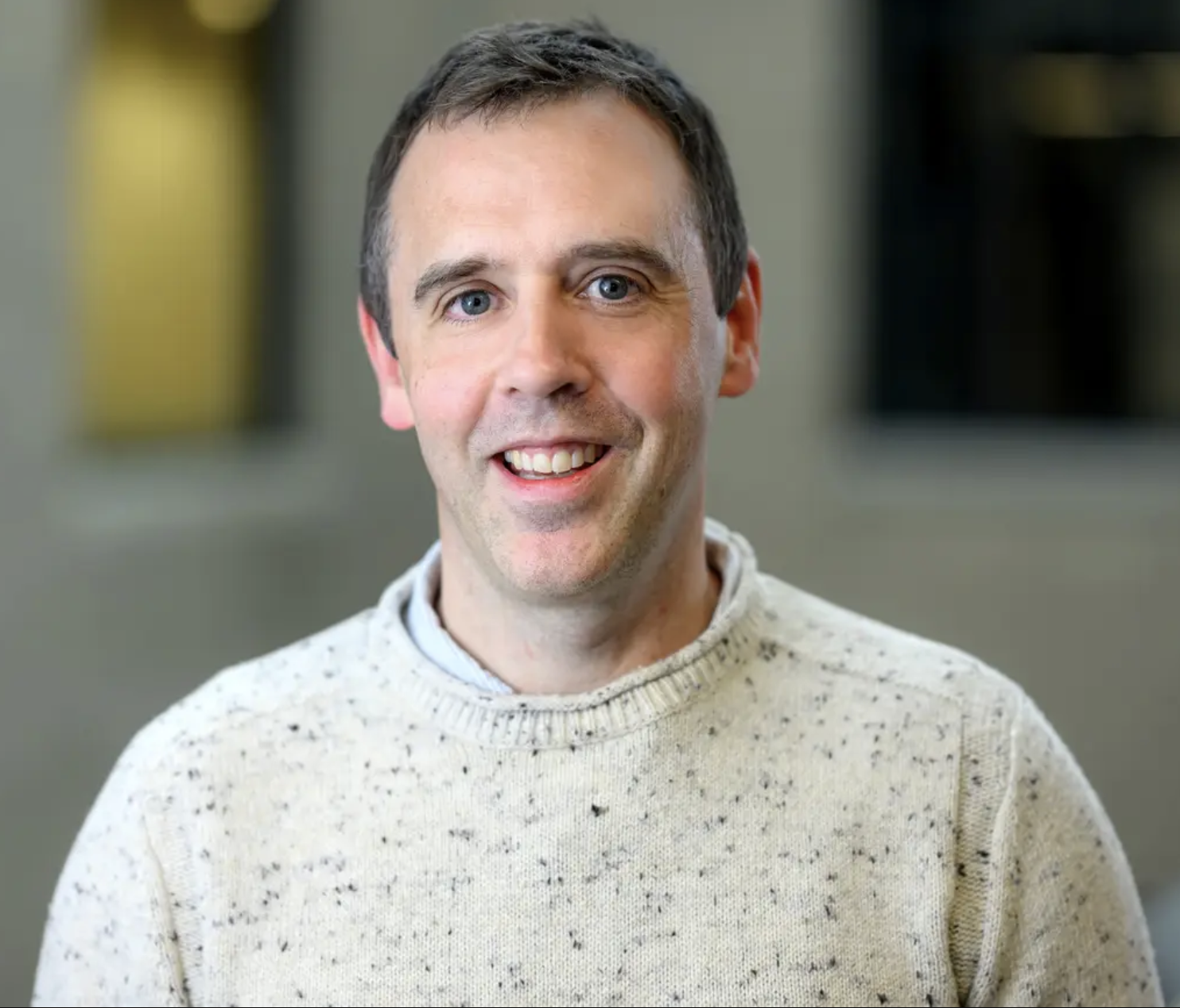
Tom Pollard
Massachussetts Institute of Technology, USA
Massachussetts Institute of Technology, USA
Title: Data for Health AI in a Time of Change
Abstract: Data for Health AI in a Time of Change explores how the health AI community is moving from an era focused mainly on model building to one that must confront deeper questions about data quality, access, governance, and representation. Using examples from recent controversies in medical AI and from the development of open research resources such as PhysioNet and MIMIC, we will explore how progress depends on creating data ecosystems that are not only larger, but more trustworthy, more reusable, and more faithful to the realities of clinical care.
Bio: Tom Pollard is a Research Scientist at Massachusetts Institute of Technology, where he serves as Technical Director of PhysioNet, and is also an Instructor in the Department of Biostatistics at Harvard T.H. Chan School of Public Health. His current work focuses on sharing data for research, education, and industry applications, particularly in critical care. Prior to joining MIT, he completed an interdisciplinary PhD in computational modeling of patient physiology at University College London, with research conducted between the Mullard Space Science Laboratory and University College Hospital. He is a Fellow of the Software Sustainability Institute, an Instructor for The Carpentries, and a member of the MIT Task Force on Open Access. He also serves on the Editorial Boards of PLOS Digital Health and npj Scientific Data, and on the Committee for the Conference on Health, Inference, and Learning (CHIL).
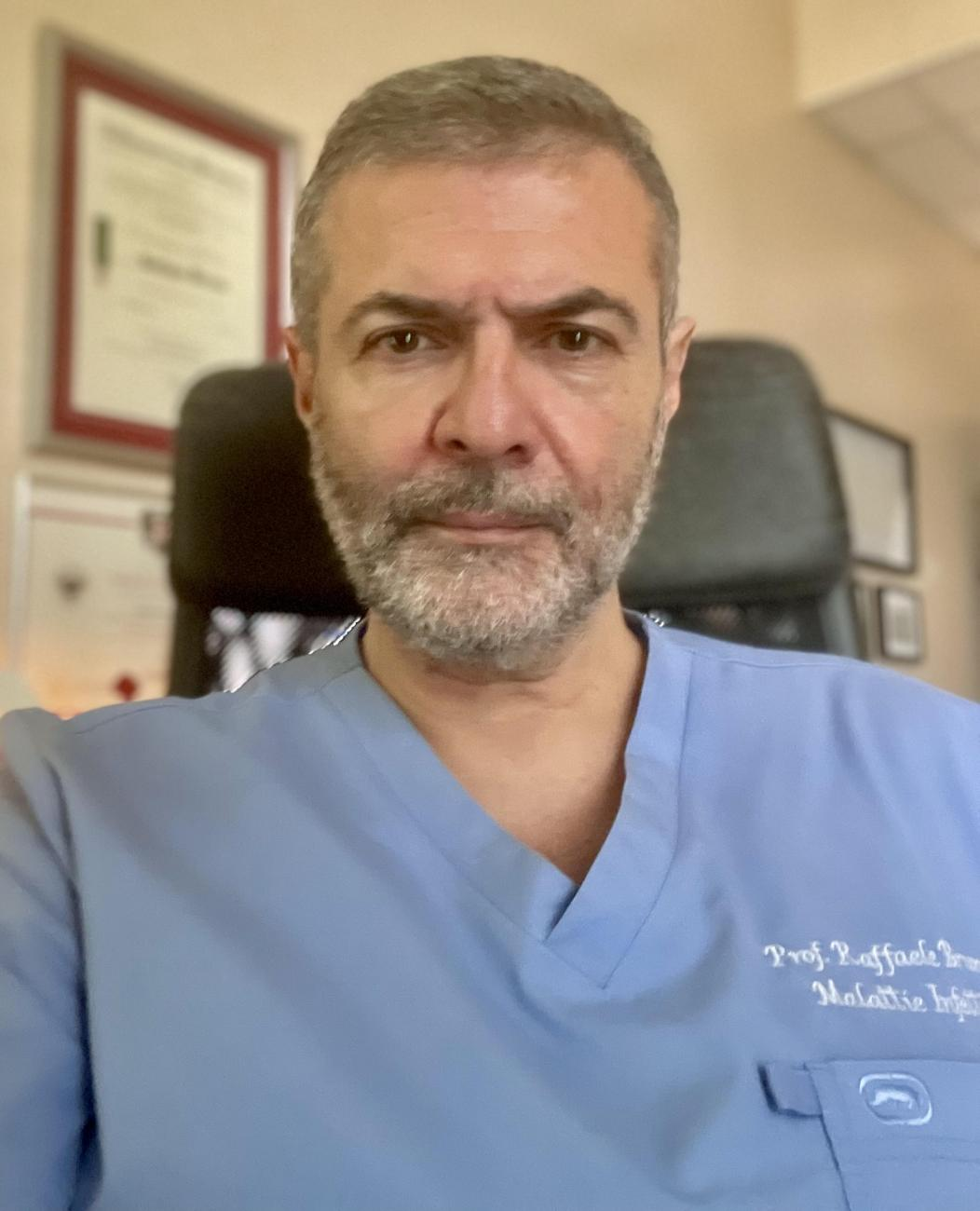
Raffaele Bruno
University of Pavia, Italy
University of Pavia, Italy
Title: From Algorithm to Antibiotic: An Infectious Disease Physician's View on Computational Health
Abstract: Artificial intelligence is increasingly proposed as a tool to address antimicrobial resistance, one of the most pressing threats in global health. Yet most predictive models are developed and validated using data from well-resourced hospitals, while the burden of resistance falls most heavily on regions where surveillance data are scarce or absent. This keynote examines that tension from the perspective of a practising infectious disease physician. Drawing on a representative clinical scenario — an empirical antibiotic decision made under diagnostic uncertainty — it illustrates how access to local resistance data, often taken for granted, is in fact a privilege unevenly distributed across the world. Recent evidence is considered honestly: machine learning models can improve prescribing where training data are rich, but their performance degrades sharply when applied to populations unlike those they learned from. The talk argues that AI risks widening existing inequities unless it is built deliberately, and proposes four requirements — inclusive data, models that signal their own limits, fairness embedded from the outset, and genuine clinician involvement — for computational tools that serve every patient, not only those whose data we already hold.
Bio: Raffaele Bruno is Full Professor of Infectious Diseases at the University of Pavia and Pro-Rector for Medical Sciences. He directs the Infectious Diseases Unit and the Medical Department at Fondazione IRCCS Policlinico San Matteo, Pavia. He graduated in Medicine in 1991 and specialised in Tropical Medicine in 1995. Over more than thirty years he has authored 383 publications with over 21,000 citations and an H-index of 67 (Scopus, May 2026). His clinical and research work focuses on severe infections, antimicrobial resistance and antimicrobial stewardship.
Important Dates
News
Sponsors